Beyond the Hype: What SpaceX Can Teach Us About the Risks of Buying an IPO
Why everyday investors lost money on the SpaceX IPO.
Since I began actively investing, SpaceX was the first major IPO to come along. Fortunately, I didn't buy it. However, watching and studying SpaceX this summer taught me several valuable lessons about IPOs and the risks of buying them.
When a privately owned business decides to sell its shares on a public stock exchange for the very first time, it is called an IPO, or Initial Public Offering.
For years, Elon Musk’s rocket company, SpaceX, was private. But on June 12, 2026, SpaceX officially held its IPO on the Nasdaq exchange under the ticker symbol NASDAQ:SPCX. The event created massive media hype. Priced initially at $135 a share, excited investors rushed to buy it on day one, pushing the price up past $161. This sudden first-day jump is known as the IPO "pop".
Looking at history, the excitement of an IPO day rarely lasts. Studies show that most newly public companies actually lose value or perform worse than the overall stock market in the year following their debut.
The chart below shows that since its all-time peak on June 15, 2026, SpaceX (SPCX) has experienced a severe drawdown of roughly -38%, vastly underperforming the Nasdaq Composite:
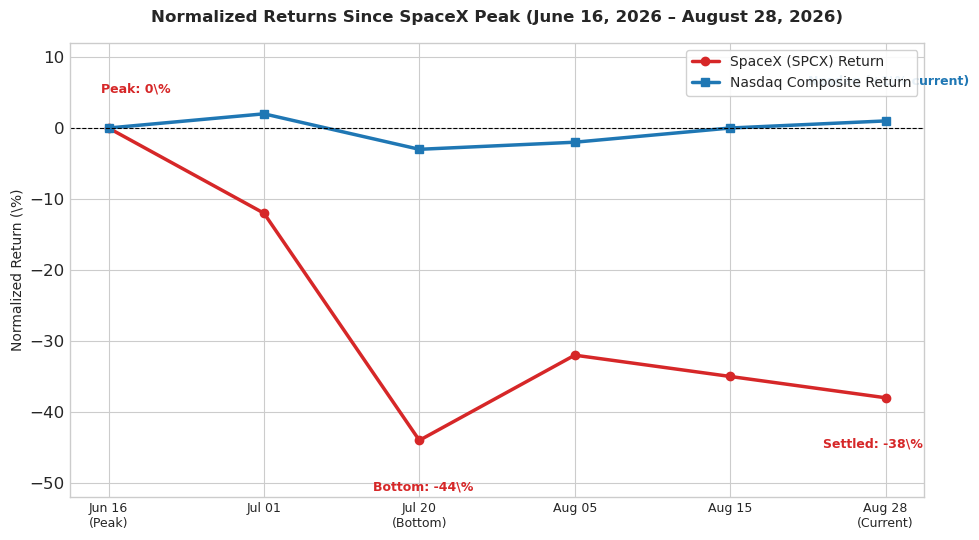
What happened with SpaceX illustrates a common "boom and bust" cycle that many IPO stocks go through, and why investing in newly public companies can be so risky.
- Institutional investors get in first. Major institutional investors, such as investment banks and large funds, are typically allocated shares before the IPO becomes available to the general public. Strong demand from these investors can help drive the initial price higher.
- The public jumps in after the price is already moving up. As the stock begins trading and gains momentum, everyday investors often buy into the excitement and pay top dollar to avoid the fear of missing out. This additional demand can push the price even higher.
- Institutional investors take profits. As buying momentum from the general public begins to weaken, institutional investors may start selling shares to lock in their gains near the top. The combination of declining demand and increasing supply can cause the stock price to fall sharply.
- Insiders make their exit. Seed investors and employees are usually blocked from selling their stock immediately after an IPO. But as those restrictions expire, a massive "unlock" happens. In August 2026, over a billion previously restricted SpaceX shares became eligible for trading. This sudden flood of newly available shares puts heavy downward pressure on the stock price.
- Wall Street takes a close look at the books. As a private company, SpaceX could spend billions on long-term, unprofitable goals like building a city on Mars. But public companies have to answer to Wall Street every three months. When SpaceX shared high costs and losses related to its massive artificial intelligence infrastructure, investors panicked and sold even more shares.
SpaceX is a great reminder that IPOs can be highly volatile. Buying a stock on its first day of trading means entering the market amid enormous hype, uncertainty, and often intense price swings. Profiting from a new IPO can require considerable skill and experience - or sophisticated options strategies. For everyday investors, one of the safest approaches is to wait a few months and let the initial excitement and volatility settle before deciding whether the stock is worth buying.
Related articles
What I Learned About Earnings Reports
How to manage the risk of holding stocks through earnings reports when prices can become extremely volatile.
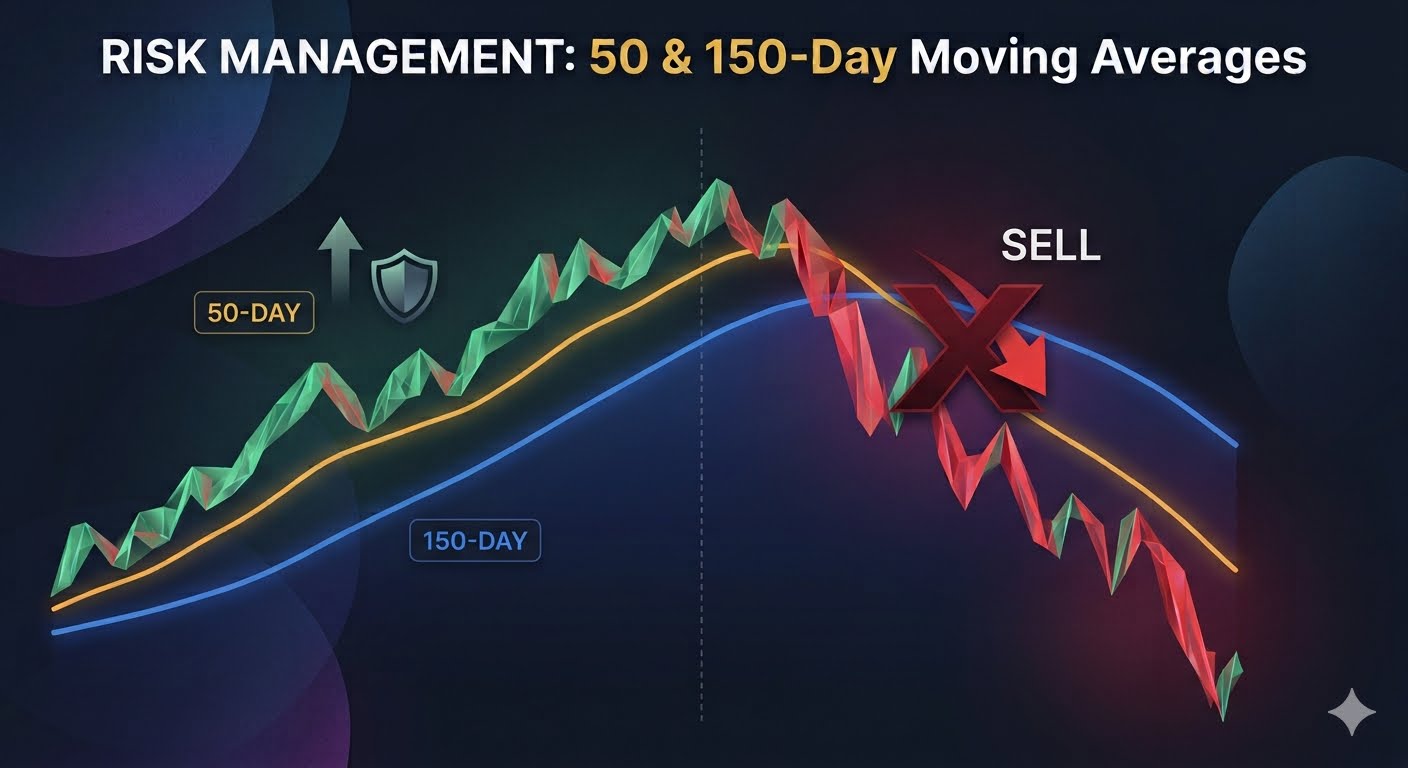
Knowing When to Sell: Using the 50-Day and 150-Day Lines to Protect Profits and Limit Losses
How to use moving averages as risk management tools.
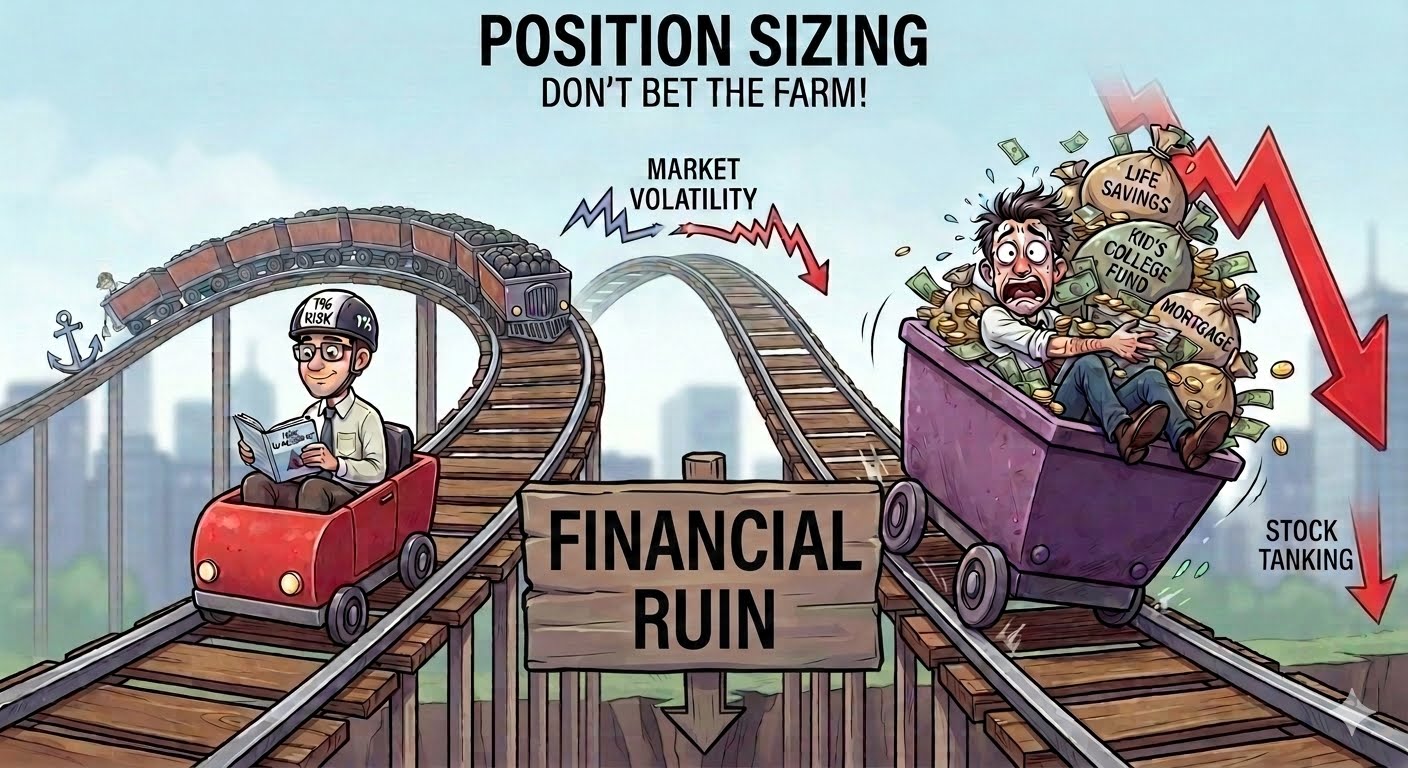
Position Sizing: Another Powerful Risk Management Tool
Why knowing how much to buy and how much you are willing to lose may be one of the most important skills for surviving in the stock market.