Position Sizing: Another Powerful Risk Management Tool
If You Can’t Sleep, You Probably Bought Too Much
Why knowing how much to buy and how much you are willing to lose may be one of the most important skills for surviving in the stock market.
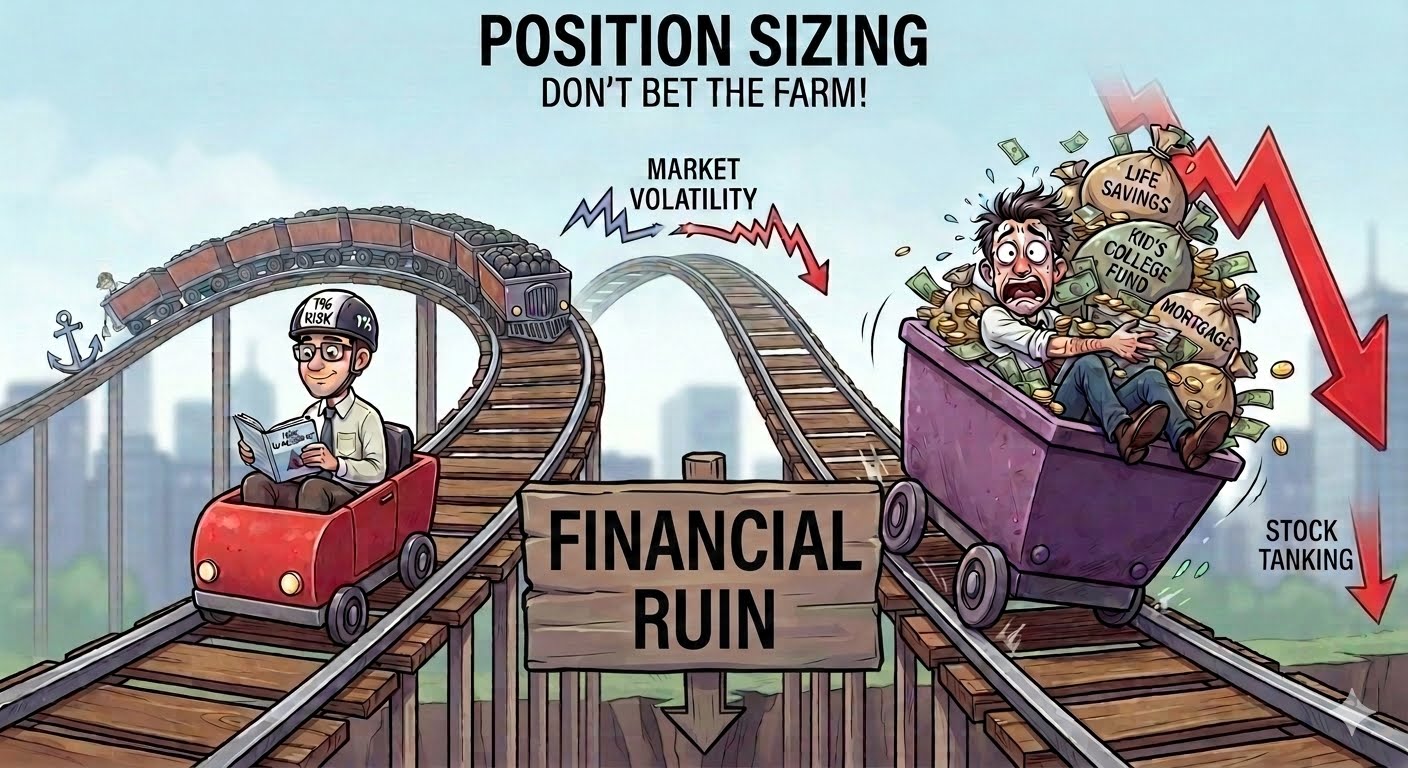
When people invest or trade stocks, they often spend most of their time deciding what to buy. But there is another question that is just as important:
How much should I buy?
This is called position sizing. Simply put, position sizing means deciding how much of your money to put into a particular stock or investment. It is one of the most useful tools for managing risk.
Why Position Sizing Matters
- First, it limits your losses. Even a stock that looks like a great investment can suddenly fall because of unexpected news, a problem with the company, or a major change in the economy. If you have invested too much in one stock, a large drop can seriously hurt your portfolio. Keeping the position small limits the damage if things go wrong.
- Second, it helps control your emotions. When you have too much money in one stock, even a normal price drop can make you nervous. You may panic and sell at the worst possible time. Jesse Livermore, one of the most famous traders in history, made this point well: “If you can't sleep at night because of your stock market position, you have probably invested too much.” The goal is to invest an amount that allows you to stay calm when the market moves against you. When you are comfortable with the size of your position, you are less likely to make emotional decisions.
- Finally, it keeps a large drawdown from wrecking your portfolio. The more carefully you protect your capital, the longer you can stay invested and give your money time to grow through compounding.
Know Your Risk Before You Buy
Before buying a stock, you should have a plan for what you will do if the stock moves in the wrong direction. This means deciding in advance how much money you are willing to lose.
Having a plan before you buy is one of the things that separates disciplined investing from gambling.
My Position-Sizing Rules
I use two simple rules to help protect my portfolio:
- Maximum Allocation: 5%
I never allow a single stock to make up more than 5% of my total portfolio. For example, if my portfolio is worth $100,000, I would not put more than $5,000 into one stock. This helps spread my money across different companies and industries. - Maximum Risk: 0.5% to 1%
I also limit the amount I am willing to lose on any one stock to between 0.5% to 1% of my total portfolio. For example, if my portfolio is worth $100,000, I would risk no more than $500 to $1,000 on a single stock. I use a stop-loss to help enforce this rule. A stop-loss is a preset order to automatically sell a stock if it falls to a certain price. If the stock reaches that price, I exit the position rather than allowing the loss to grow larger. This means that if my stop-loss is triggered, I lose no more than about 1% of my total portfolio on that trade, while the other 99% - 99.5% remains protected.
Find Your Own Comfort Level
My rules may not be right for everyone. Position sizing is not one-size-fits-all.
The right amount to invest depends on your experience, your financial situation, and how comfortable you are with risk. Someone who is new to investing may want to use smaller positions, while a more experienced investor may be comfortable with larger ones.
The most important thing is to set your rules before you invest your money and then follow them consistently.
You cannot control what the stock market does. But you can control how much you invest and how much you are willing to lose.
That is what makes position sizing such a powerful risk-management tool.
Related articles
What I Learned About Earnings Reports
How to manage the risk of holding stocks through earnings reports when prices can become extremely volatile.
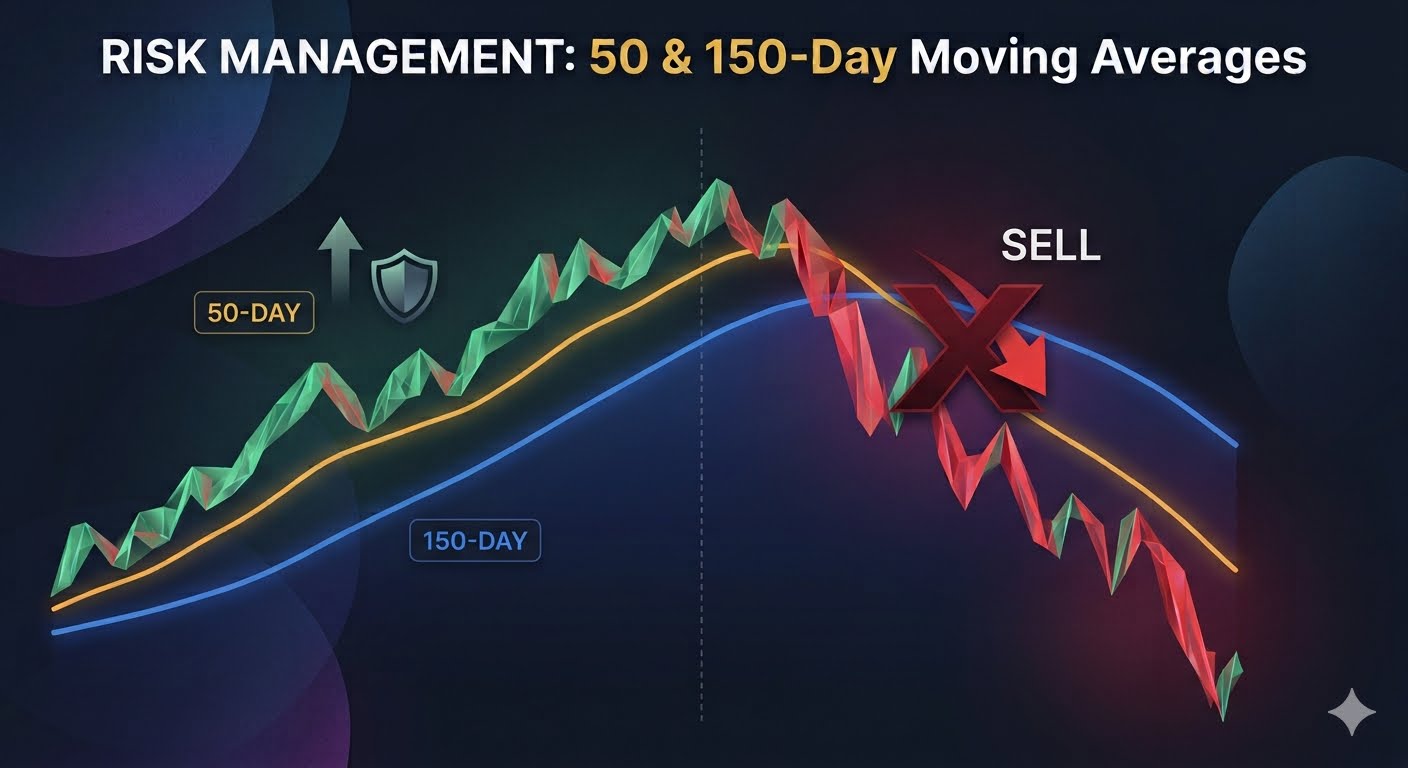
Knowing When to Sell: Using the 50-Day and 150-Day Lines to Protect Profits and Limit Losses
How to use moving averages as risk management tools.

Beyond the Hype: What SpaceX Can Teach Us About the Risks of Buying an IPO
Why everyday investors lost money on the SpaceX IPO.